Before Undo: How People Fixed Typos on a Typewriter
Before Undo, a typo meant erasers, white paint, or retyping the page. A short, friendly history of fixing mistakes, from typewriters to Ctrl+Z.
Type the word "teh." Press Ctrl+Z and watch it vanish as if it had never existed.
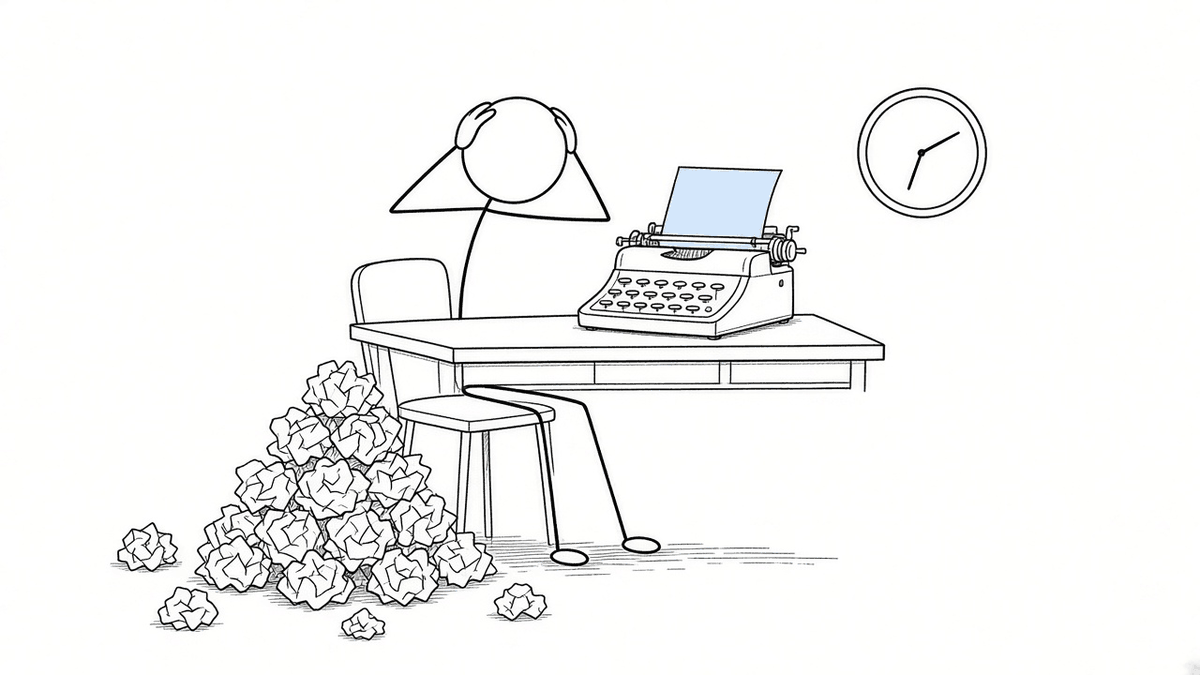
Now imagine that the letters had been punched into a sheet of paper with an inked metal stamp, at speed, and that the paper was the only copy, and that the boss wanted it by four o'clock.
For most of the twentieth century that was the deal. A typewriter stored your words nowhere but the page. Every typo was permanent unless you fought it, and people fought it with remarkable ingenuity. The story ends, a little unexpectedly, at the Undo key.
The eraser years
The first line of defense was an abrasive typewriter eraser, because ordinary typewriter ink didn't sit on the paper so much as soak into it. You rolled the page up, scrubbed at the wrong letter until it went faint, rolled the page back down, lined it up just so, and typed the right letter on top. It was less editing than sanding.
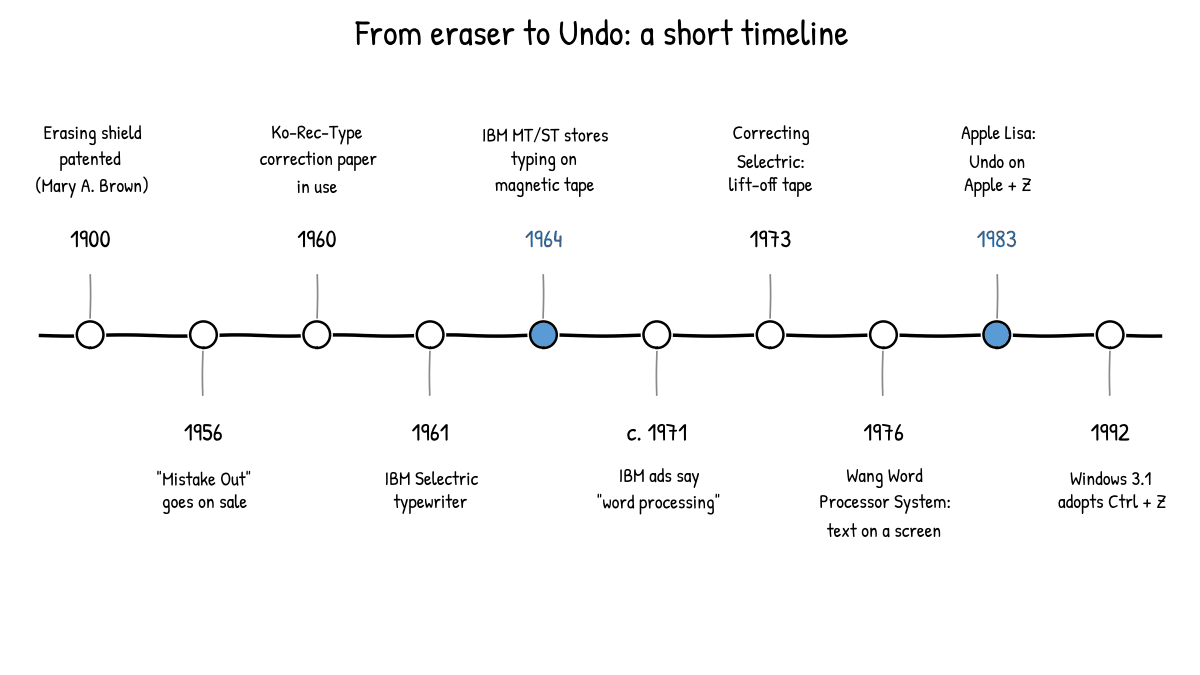
To avoid wiping out the neighbors of the guilty letter, typists used an erasing shield: a thin sheet of metal or plastic with small slots cut into it. You laid it over the page so only the mistake peeked through, and erased through the slot. The Smithsonian's National Museum of American History holds one marketed as the "Landis," patented by Mary A. Brown of Washington, D.C., in 1900.
Then there were carbon copies. To make duplicates, you stacked sheets with carbon paper between them, and every keystroke printed on all of them at once. That was wonderful until you made a mistake, because now you had made it three times. Typing manuals told you to slip a shield or scrap of paper in behind the sheet you were erasing, so the carbon didn't smear onto the copy below, and then to fix each copy in turn.
Often it was quicker to give up and retype the whole page. Nobody enjoyed this.
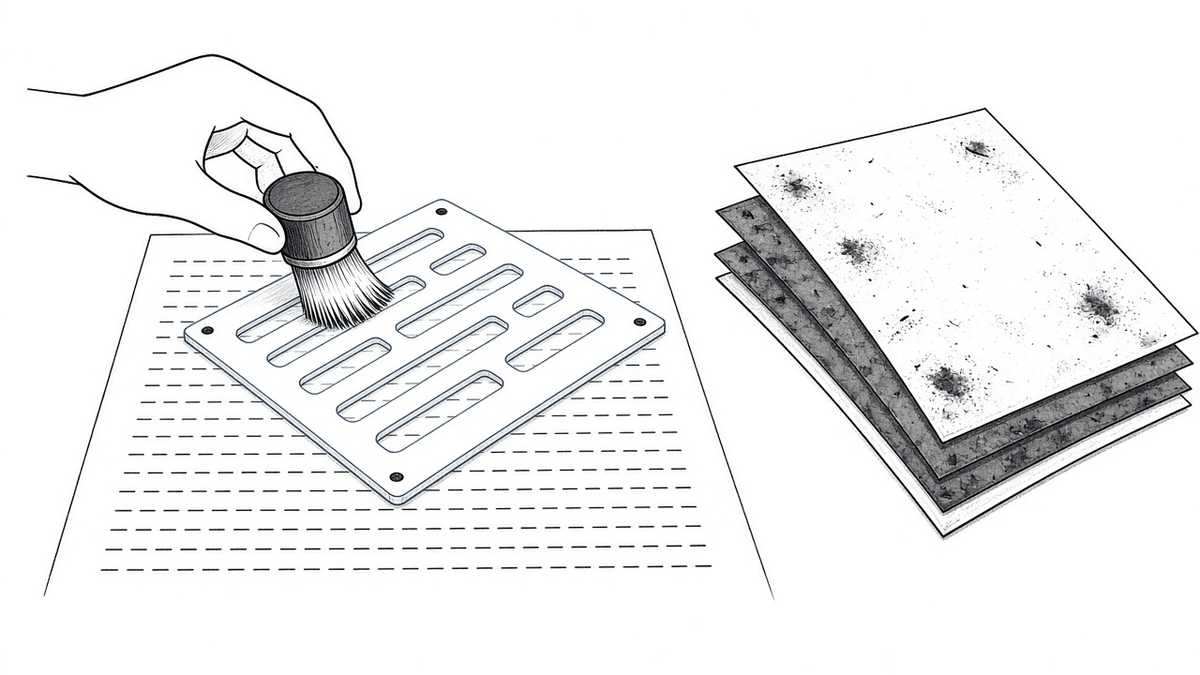
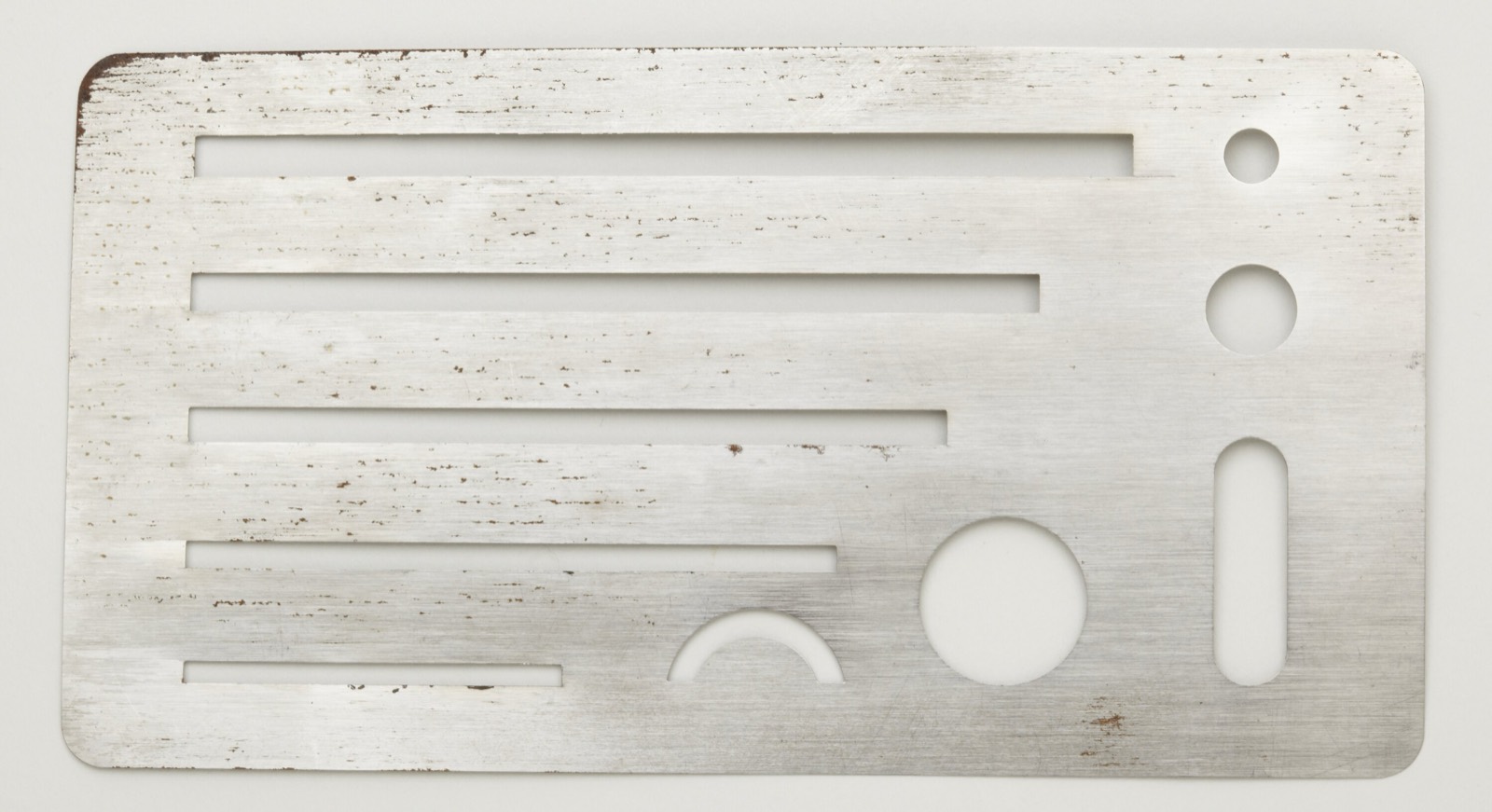 Photo: Museums Victoria / Wikimedia Commons, CC BY 4.0

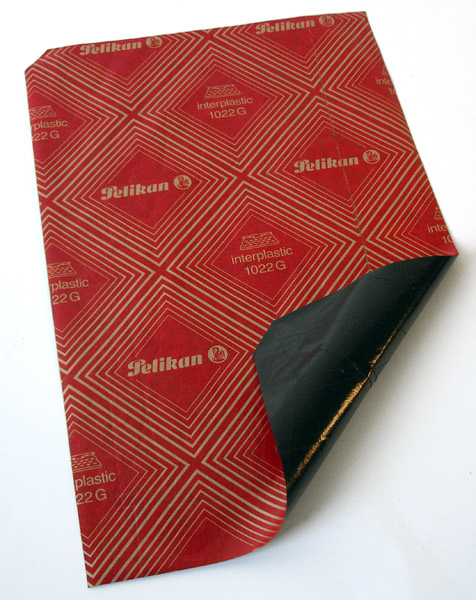 Photo: Pavel Krok / Wikimedia Commons, CC BY-SA 2.5

A secretary, a paintbrush, and a kitchen
In the early 1950s, Bette Nesmith was a secretary at Texas Bank and Trust in Dallas. She was also a commercial artist and, by most accounts, not a great typist. The office's new electric typewriters made clean corrections even harder.
Artists don't erase mistakes. They paint over them. So she did that too. She mixed water-based tempera paint to match the bank's stationery and carried it to work with a small brush. According to the Texas State Historical Association, she started doing this in 1954. By 1956 other secretaries wanted some, and she was bottling it as "Mistake Out," with her son and his friends filling bottles at home.
Her son, Michael, later found a different line of work as a member of the Monkees.
The business didn't take off right away. In 1957 she tried to interest IBM in marketing the fluid. IBM declined. Then she was fired from the bank after she accidentally put her own company's name on a letter she typed for her employer, which, as mistakes go, was a very honest one. The product, renamed Liquid Paper, kept growing. By 1968 the company sold a million bottles a year. In 1979 she sold it to Gillette for nearly $48 million.
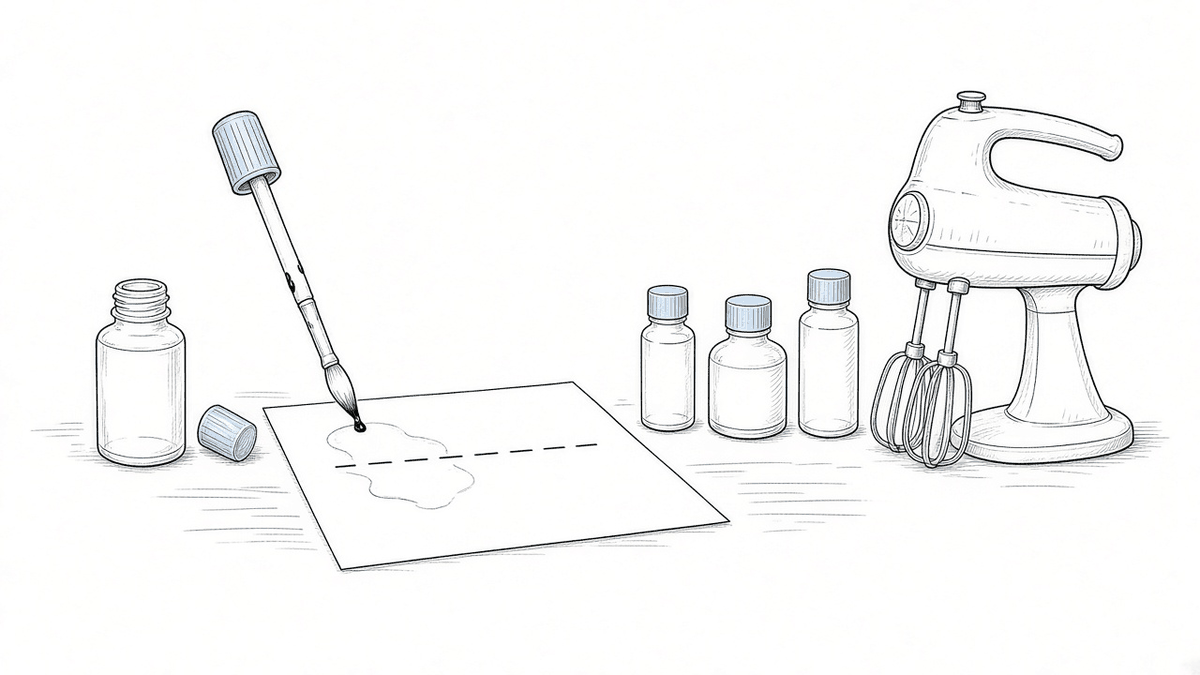
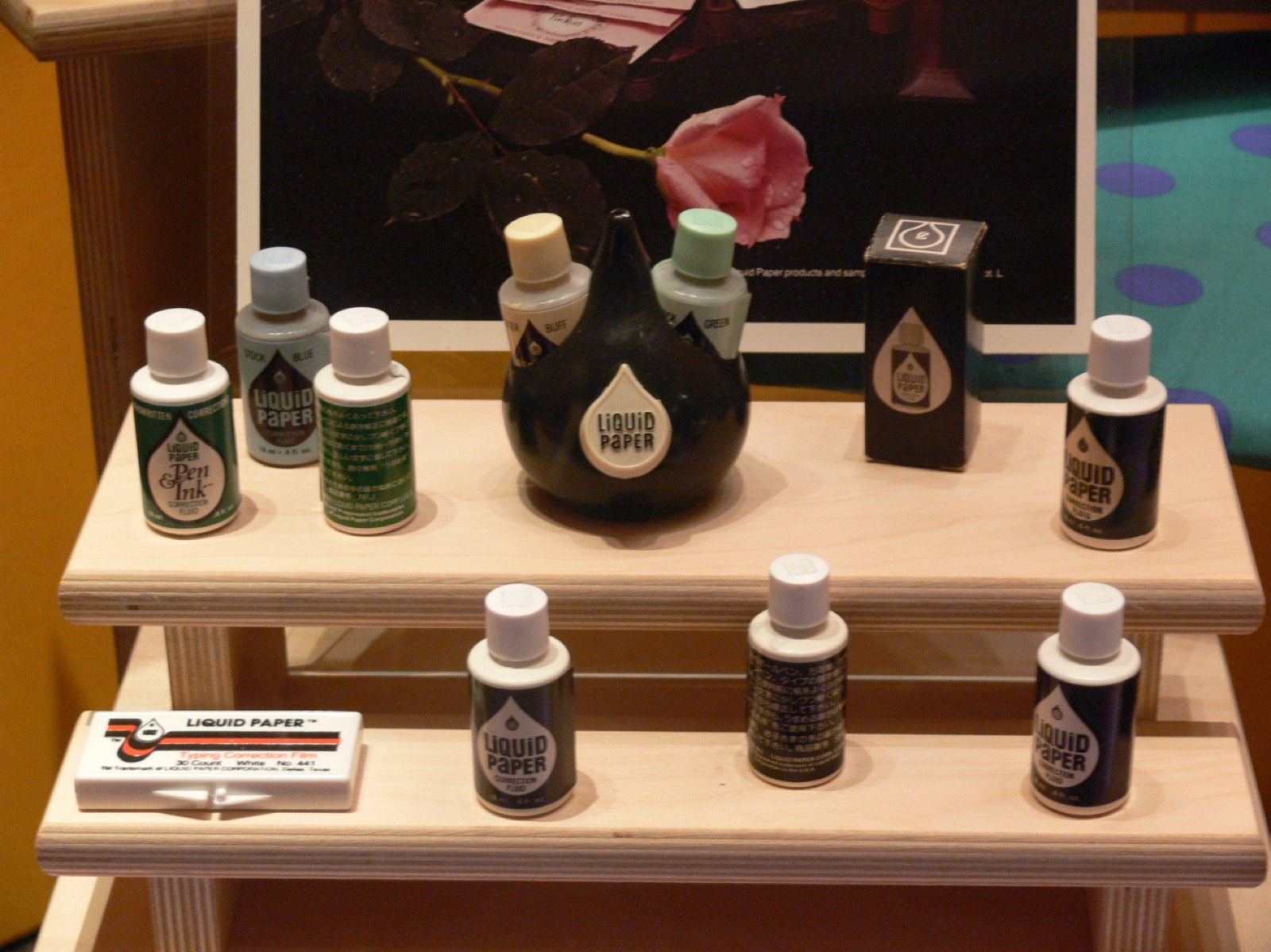 Photo: FA2010 / Wikimedia Commons, Public Domain

A little bottle of white paint, in other words, turned into a fortune. That tells you how badly people wanted to stop retyping.
Correction paper, then tape that lifts letters off
Liquid Paper had rivals. One was correction paper: little slips coated with white transfer ink. You backspaced, held the slip between the ribbon and the page, and typed the wrong letter again. The key struck the slip instead of the ribbon and pressed white over the mistake, so you could type the right letter on top. The brand Ko-Rec-Type was in use by 1960, according to its trademark registration, which describes it as paper with "white transfer ink" for masking "erroneously typed impressions."
Covering mistakes is one approach. Removing them is better. In 1973, IBM's Correcting Selectric did something properly clever. Its ribbon used ink that, in IBM's description, didn't soak into the paper. It sat on the surface. So the machine could carry a second, sticky tape. Press the correcting key, retype the wrong letter, and the sticky tape lifted the letter clean off the page. The original operating manual puts it this way: lifting "incorrectly typed characters clean off the page."
The same manual adds a small, very human footnote. If you were typing carbon copies, you still had to correct those "in the usual way." The future had arrived, but only on the top sheet.
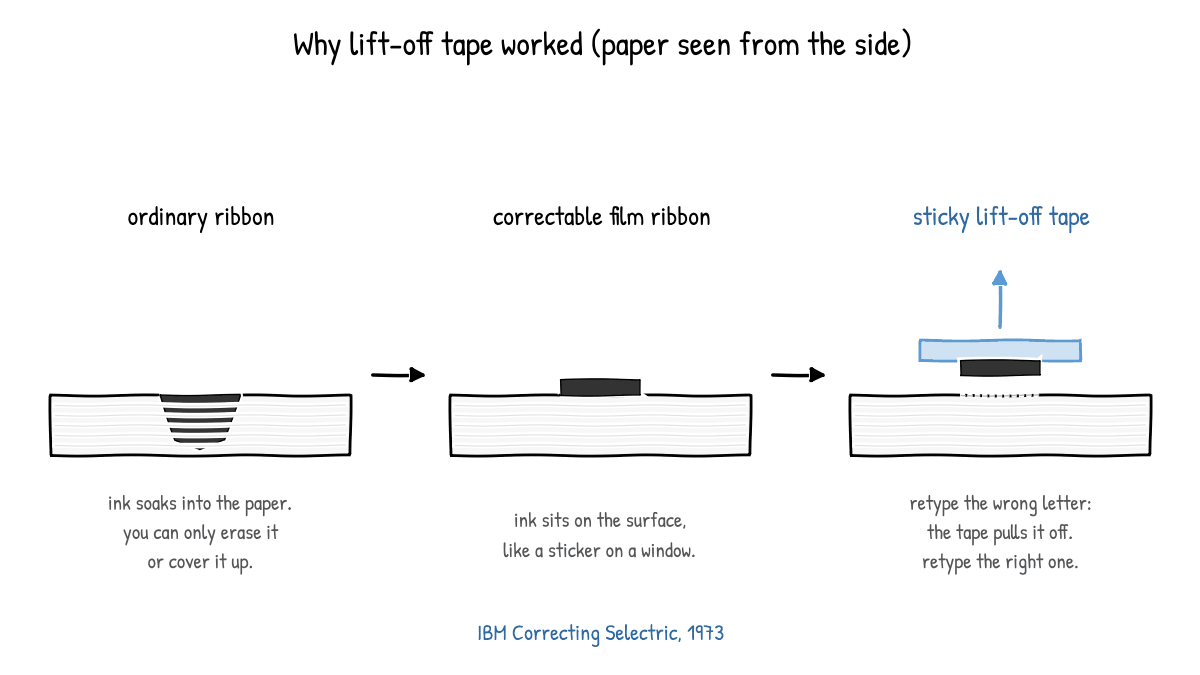
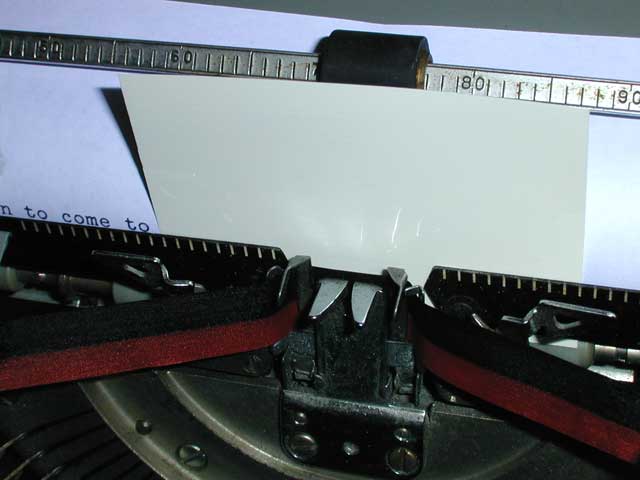 Photo: X570 / Wikimedia Commons, Public Domain

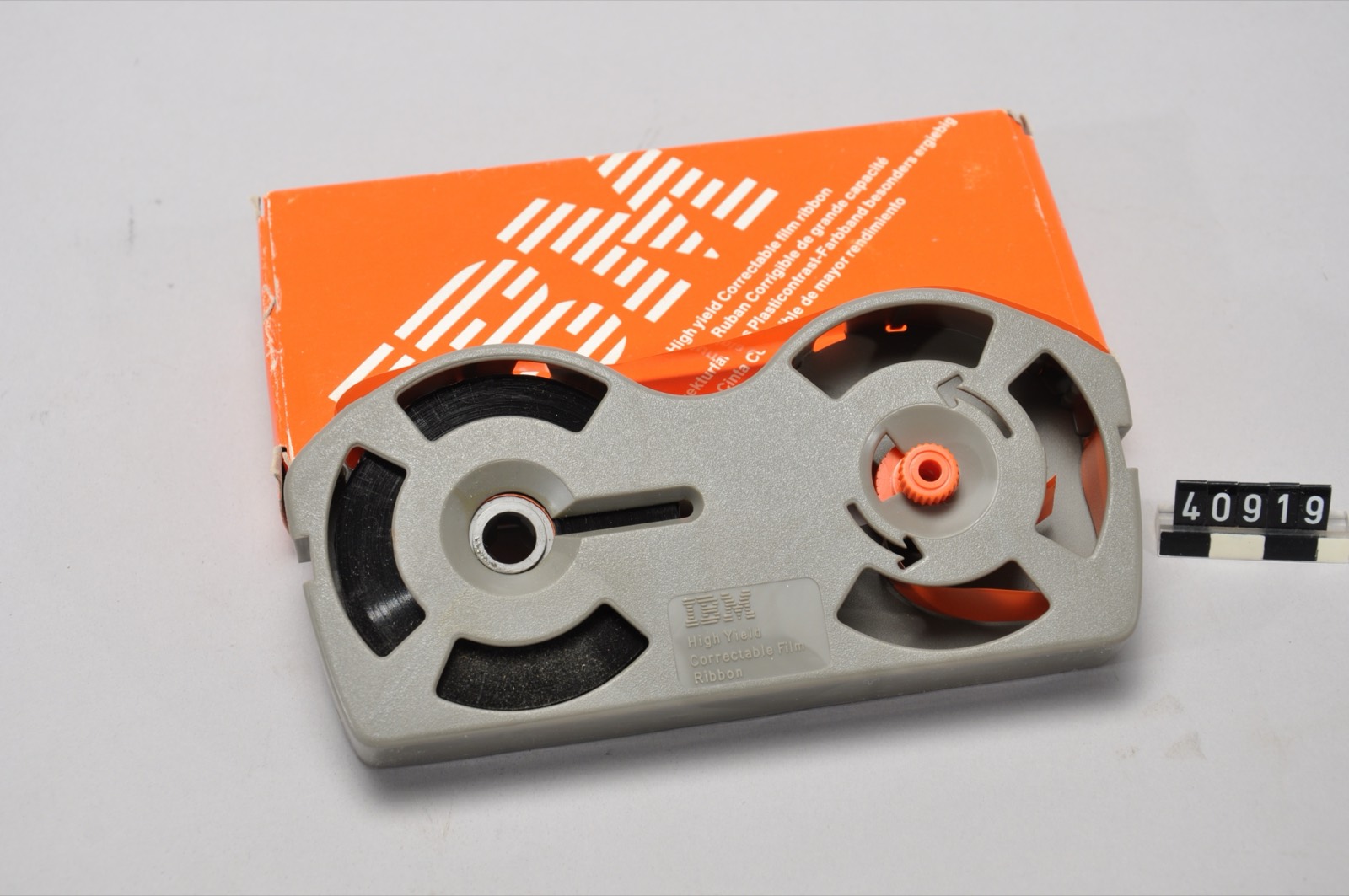 Photo: Tekniska museet / Wikimedia Commons, CC BY 4.0

The typewriter that remembered
The truly big shift came almost a decade earlier, and it had nothing to do with paint or tape.
In 1964, IBM introduced the MT/ST, the Magnetic Tape Selectric Typewriter. It was a Selectric typewriter hooked up to a cabinet that recorded every keystroke onto magnetic tape. IBM's own history calls it "the first, albeit analog, word processor device."
Here's how it physically worked. You typed a draft. When you made a mistake, you backspaced and typed the correct letters over the error. The paper looked like a mess. But the tape now held the corrected version. Then you put in a clean sheet, and the machine played the tape back and typed the whole thing again by itself, perfectly, at about 175 words a minute, according to historian Thomas Haigh.
That's the key idea in everything that followed: keep the words somewhere other than the paper, fix them there, and print only when they're right. The paper stopped being the document. It became a copy of the document.
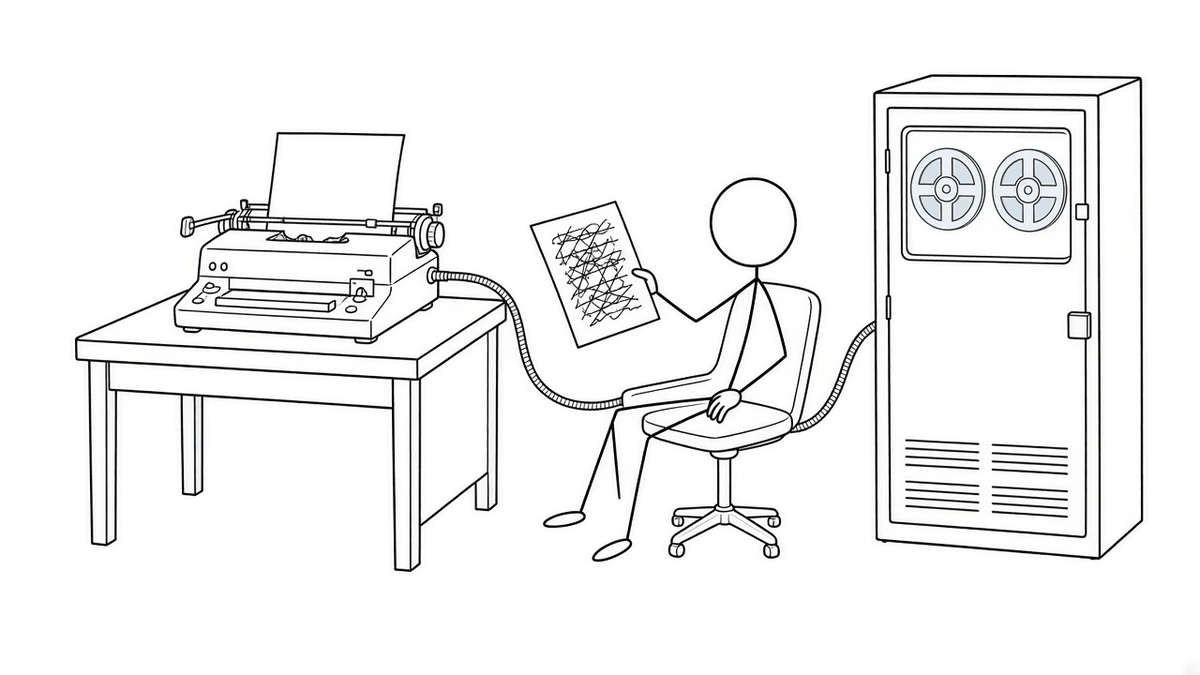
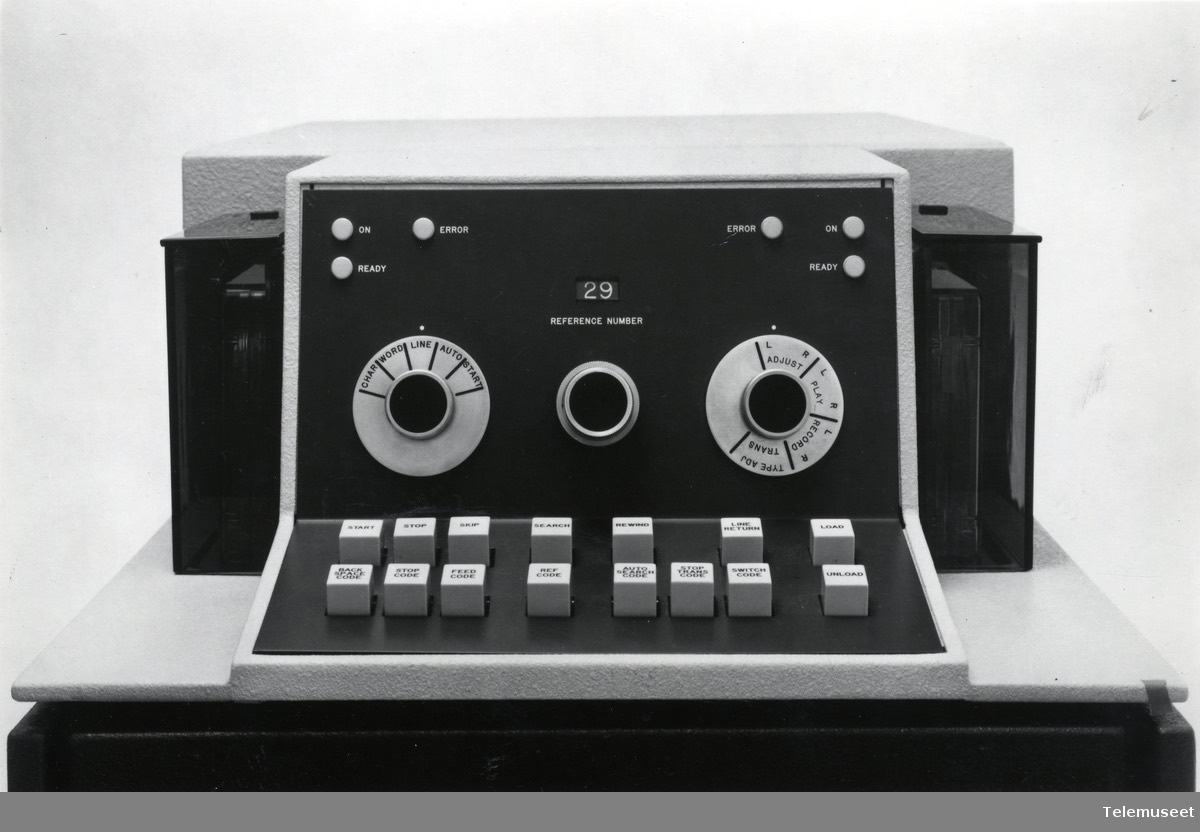 Photo: Norsk Teknisk Museum / Wikimedia Commons, CC BY-SA 4.0

IBM's marketing helped make a name for this idea. The phrase "word processing" is usually credited to Ulrich Steinhilper, an IBM Germany typewriter salesman. IBM began using "word processing machines" in its advertising around 1971, and by 1972 the term was common in office-management magazines.
Then the words moved onto a screen
The MT/ST had no screen. You couldn't see the text on the tape. You had to trust it. The next step was obvious once someone said it out loud: show the words on a screen and let people change them before anything touches paper.
Several companies built screen-based word processors in the 1970s. The best known was Wang Laboratories, which launched its Word Processor System in 1976, with screens, floppy disks for storing documents, and models that let several workstations share storage. According to Haigh, Wang became synonymous with high-end word processing.
On a screen, a typo is just a few dots of light. Nothing is on paper yet. You can delete, insert a sentence, or move a paragraph, and the page reflows. Printing is the last step, not the first.
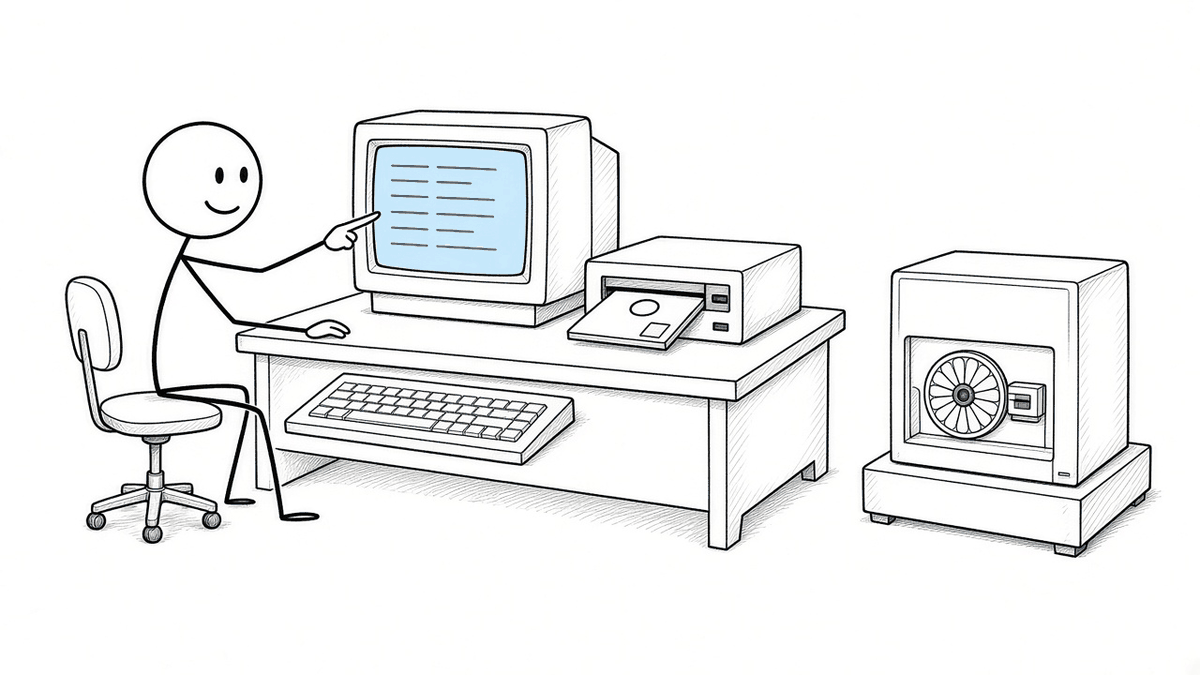
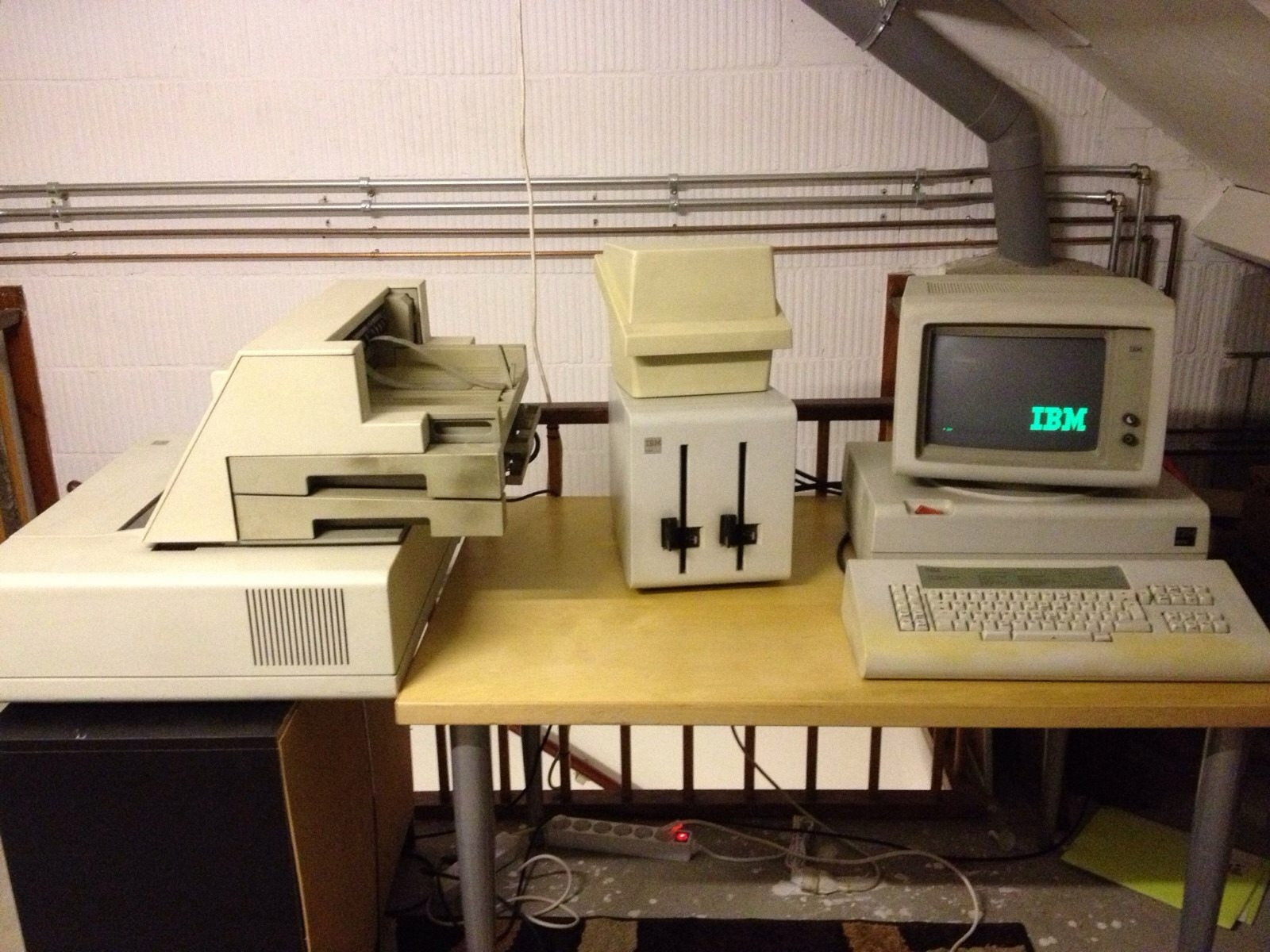 Photo: Wikidevnl / Wikimedia Commons, CC BY-SA 4.0

And finally, Ctrl+Z
Once text was just data, "undo" became possible in a way it never could be on paper. You could keep a little record of what you just did and run it backward.
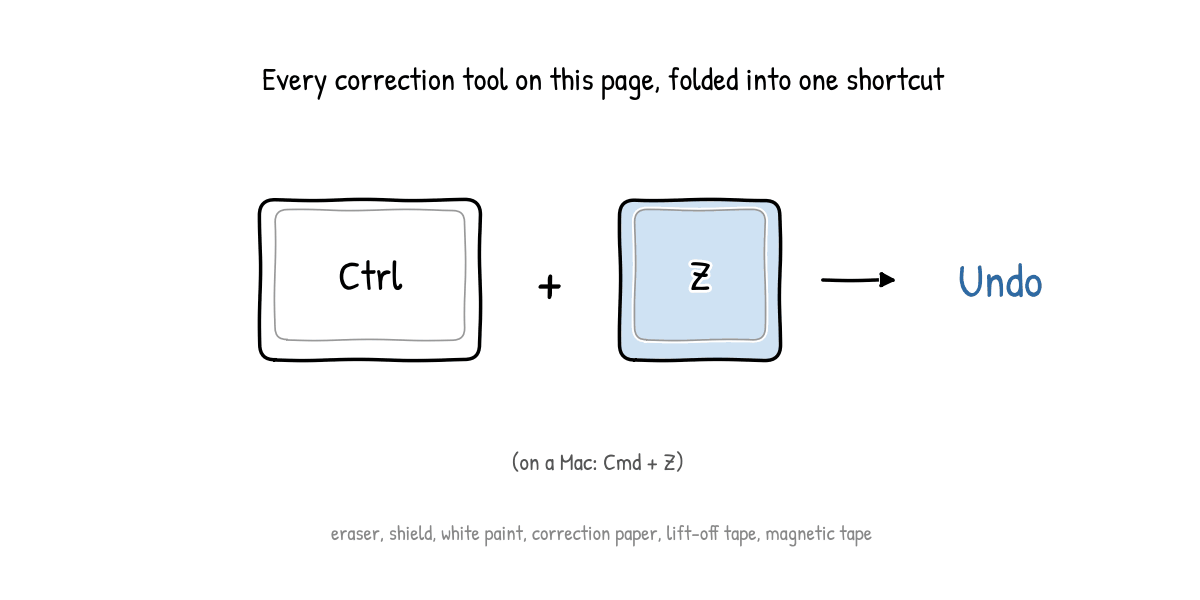
Undo, cut, copy, and paste grew up in software for the Xerox Alto in the 1970s. The keyboard shortcuts most of us use came later. On Apple's Lisa computer, released in 1983, programmer Larry Tesler assigned Undo, Cut, Copy, and Paste to Z, X, C, and V. They sit together in the bottom-left corner of the keyboard, where your left hand can reach them while your right hand is on the mouse. The Macintosh kept them. Windows adopted Ctrl+Z, Ctrl+X, Ctrl+C, and Ctrl+V in Windows 3.1, in 1992.
So the four o'clock deadline, the gritty eraser, the bottle of white paint, and the sticky tape all quietly ended up as one key in the corner of the keyboard.
Where the words live now
Today's documents are the great-grandchildren of that magnetic tape. A Word .docx file is, underneath, the text plus a set of instructions for how it should look. That's why you can open one, fix a single typo, and save it again without retyping anything. Nobody needs to roll the page back down and line it up.
These days a browser can do it: EditDocx opens a .docx in your browser tab for free, with no signup, and the editing happens locally, so the document's content isn't uploaded. If you're curious how that works, there's more in Editing DOCX Without Upload and How to Edit Word Online Free.
The typists of 1955 would probably find all this either wonderful or mildly insulting. Possibly both.
FAQ
How did people fix typos on a typewriter? With hard typewriter erasers and erasing shields, by painting over mistakes with correction fluid like Liquid Paper, with correction paper that pressed white over a wrong letter, and from 1973 with IBM's Correcting Selectric, which lifted letters off with sticky tape. Often they just retyped the page.
Who invented Liquid Paper? Bette Nesmith Graham, a Dallas secretary and artist. She began selling it as "Mistake Out" in 1956 and later renamed it Liquid Paper. Her son was Michael Nesmith of the Monkees.
What was the first word processor? IBM calls its 1964 MT/ST (Magnetic Tape Selectric Typewriter) the first, albeit analog, word processor. It recorded typing on magnetic tape so mistakes could be fixed and the page reprinted automatically.
When did Ctrl+Z become Undo? The Z, X, C, V shortcuts for Undo, Cut, Copy, and Paste first appeared on Apple's Lisa in 1983, came to the Macintosh, and arrived on Windows with Windows 3.1 in 1992.
Image credits
Historical photographs from Wikimedia Commons (illustrations in this post are original):
- Erasing Shield Stainless Steel.jpg — Museums Victoria, CC BY 4.0
- Carbon paper.jpg — Pavel Krok, CC BY-SA 2.5
- Liquid paper products Womens Museum.jpg — FA2010, Public Domain
- Filmintypewriter.jpg — X570, Public Domain
- IBM Correcting Selectric II tape.jpg — Tekniska museet, CC BY 4.0
- IBM Magnetic Tape-Selectric Typewriter panel.jpg — Norsk Teknisk Museum, CC BY-SA 4.0
- IBM Display Writer System.jpg — Wikidevnl, CC BY-SA 4.0